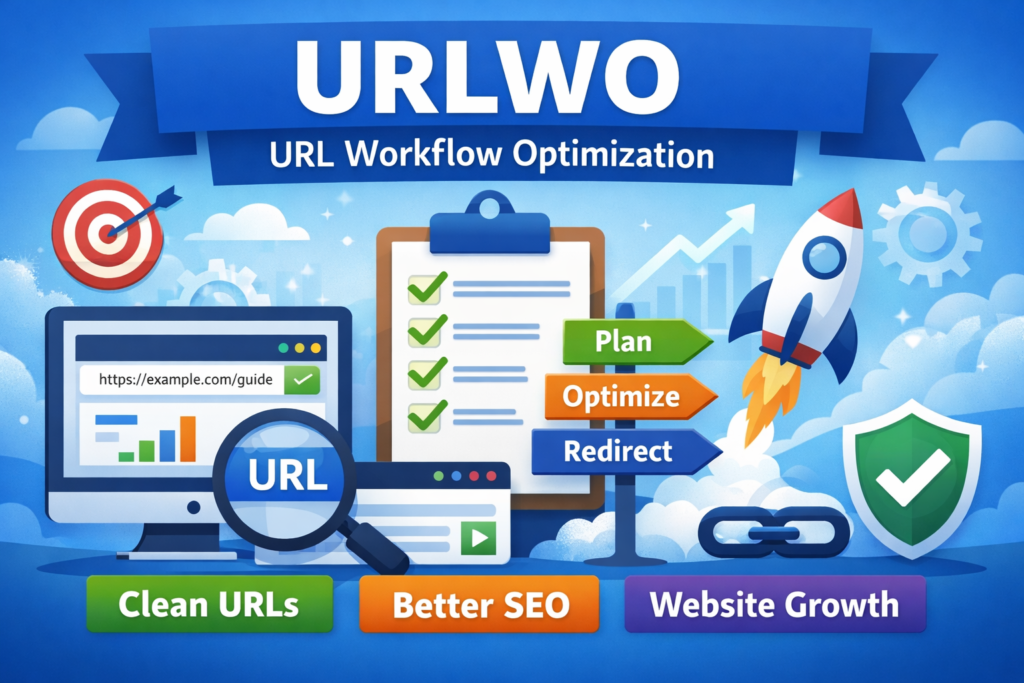

URLs are an important part of every website. A URL shows users where they are on a site. It also helps search engines understand content. Many websites fail because URLs are confusing or messy. This is where URLWO becomes important. it means URL Workflow Optimization. It is a way to plan create manage and improve URLs over time. URLWO treats URLs as long term assets. It does not treat them as random links.
This guide explains URLWO in a simple way. It uses easy words and clear structure. Anyone can understand it even without technical skills.
What Is URLWO
It is a method to manage URLs in a smart way. It focuses on how URLs are created used changed and maintained. it helps make URLs clear simple and useful. It works for users and search engines. it is not an official rule or standard. It is a practice that many sites follow because it works.
What URLWO Focuses On
-
Clear URLs
-
Simple structure
-
Easy reading
-
Long term stability
-
Better website organization
it can be used on small sites and large sites.
Why It Is Important
URLs affect trust. People look at links before clicking. A clean URL feels safe. A messy URL feels risky. URLs also affect search engines. Search engines use URLs to understand pages. When URLs are planned well many problems are avoided.
Problems Without URLWO
-
Broken links
-
Duplicate pages
-
Confusing navigation
-
Poor search visibility
-
Hard site maintenance
it helps prevent these issues.
Main Goals of This
This has clear goals. These goals guide every decision.
URLWO Goals
-
Make URLs easy to read
-
Keep URLs consistent
-
Avoid changing URLs often
-
Help users understand content
-
Help search engines crawl pages
-
Support future site growth
Each goal supports long term success.
URL Lifecycle in URLWO
URLWO treats URLs like living assets. Every URL has a lifecycle.
URL Lifecycle Stages
| Stage | Meaning |
|---|---|
| Planning | Decide structure and rules |
| Creation | Build the URL |
| Optimization | Improve clarity |
| Maintenance | Monitor performance |
| Change | Redirect when needed |
| Retirement | Remove safely |
This process keeps URLs clean and stable
URL Planning Stage
Planning is the most important step. Many problems happen when planning is skipped.
What To Plan Before Creating URLs
-
Site sections
-
Content types
-
Folder structure
-
Naming rules
-
Growth needs
Planning saves time later.
URL Planning Checklist
-
Define main categories
-
Define subcategories
-
Decide naming style
-
Use simple words
-
Avoid future changes
Good planning reduces errors.
URL Structure in URLWO
Structure shows how content is organized. A good structure is logical and clear.
Rules for URL Structure
-
Use folders only when needed
-
Keep depth shallow
-
Match navigation layout
-
Avoid random numbers
-
Avoid extra parameters
Clear structure helps users and systems.
Slug Optimization
A slug is the readable part of a URL. It usually comes after the last slash.
Slug Rules in URLWO
-
Use real words
-
Keep it short
-
Match page topic
-
Avoid filler words
-
Use lowercase text
A good slug explains the page clearly.
Slug Best Practice Table
| Element | Rule |
|---|---|
| Length | Short |
| Words | Simple |
| Format | Hyphen separated |
| Meaning | Clear |
| Case | Lowercase |
Good slugs improve trust.
Consistency in URLWO
Consistency is very important. All URLs should follow the same rules.
Areas That Need Consistency
-
Letter case
-
Word separators
-
Plural usage
-
Slash usage
-
Naming style
Consistency avoids duplicate URLs.
Consistency Rules Table
| Rule Area | Standard |
|---|---|
| Case | Lowercase |
| Separator | Hyphen |
| Slash | One style only |
| Versioning | Avoid |
| Parameters | Limited |
Once rules are set they must be followed.
Redirect Management
Redirects are part of URLWO. They protect users and search engines.
When Redirects Are Needed
-
Page URL changes
-
Page moves location
-
Page is merged
-
Site is redesigned
-
Domain changes
Redirects must be planned.
Redirect Best Practices
-
Use permanent redirects
-
Avoid chains
-
Keep redirect lists
-
Test redirects often
Good redirects protect traffic.
URLWO and User Experience
URLs affect how users feel. Simple URLs feel safe. Complex URLs feel risky.
How URLWO Helps Users
-
Easy to read links
-
Clear page meaning
-
Better navigation
-
More trust
-
Less confusion
Users are more likely to click clean URLs.
URLWO as a Process
URLWO is not a one time task. It is ongoing work.
Ongoing URLWO Tasks
-
Monitor URLs
-
Fix broken links
-
Review redirects
-
Enforce rules
-
Audit structure
Regular work keeps the site healthy.
URLWO for Large Websites
Large sites need strong URL rules. Many teams create content.
Benefits for Large Sites
-
Shared standards
-
Less confusion
-
Easier training
-
Lower maintenance cost
-
Better scalability
URLWO helps teams work together.
Common URL Mistakes URLWO Prevents
Many sites repeat the same mistakes.
Common URL Errors
-
Auto generated URLs
-
Long unreadable links
-
Keyword stuffing
-
Changing URLs often
-
No redirect tracking
-
Mixed rules
URLWO reduces these mistakes.
URLWO Use Cases
It works in many situations.
Common Use Cases
-
Blogs
-
News sites
-
Online stores
-
Marketing campaigns
-
Knowledge bases
-
Corporate sites
Each use case benefits from clean URLs.
Use Case Benefits Table
| Use Case | Benefit |
|---|---|
| Blog | Clear articles |
| Store | Easy navigation |
| Marketing | Higher trust |
| Migration | Traffic safety |
| Enterprise | Control |
it adapts to each case.
URLWO Tools and Systems
Some people use tools to support this. Tools are helpful but not required.
Tool Support Areas
-
URL tracking
-
Redirect mapping
-
Analytics
-
Bulk management
-
Error detection
Tools support the process but rules come first.
URLWO Is Not a Standard
It is not an official rule. No authority controls it. it exists because it solves real problems. Many best practices started the same way.
The Future of This
Websites are growing. Automation is increasing.
Future Trends
-
Smart URL planning
-
Automatic redirect checks
-
CMS rule enforcement
-
Better analytics
-
AI support
Even with new tools clear URLs will always matter.
Frequently Asked Questions
What is URLWO?
It means URL Workflow Optimization. It is a method to plan create manage and protect website URLs. It helps keep URLs clean simple and stable.
Why is it important for websites?
It improves website structure. It helps users trust links. It helps search engines understand pages. It reduces broken links and errors.
Can small websites use this?
Yes small websites can use this. It works for blogs business sites and personal pages. It helps sites grow without URL problems
Does it require tools?
No tools are required for URLWO. Rules and planning are more important. Tools can help but are optional
When should URLs be changed?
URLs should only change when needed. If a URL changes a redirect must be added. Frequent changes should be avoided
What happens if it is ignored?
Ignoring URLWO can cause problems. Broken links can appear. Duplicate pages can exist. Search traffic can drop
How does it help users?
It creates readable links. Users understand pages faster. Users trust clean URLs more. Navigation becomes easier
Conclusion
It is about respect for URLs. It treats them as long term assets. When URLs are planned well sites become easier to manage. Users trust them more. Search engines understand them better. URL Workflow Optimization is simple in idea. It requires discipline and consistency. Clean URLs create strong foundations. Strong foundations support growth.