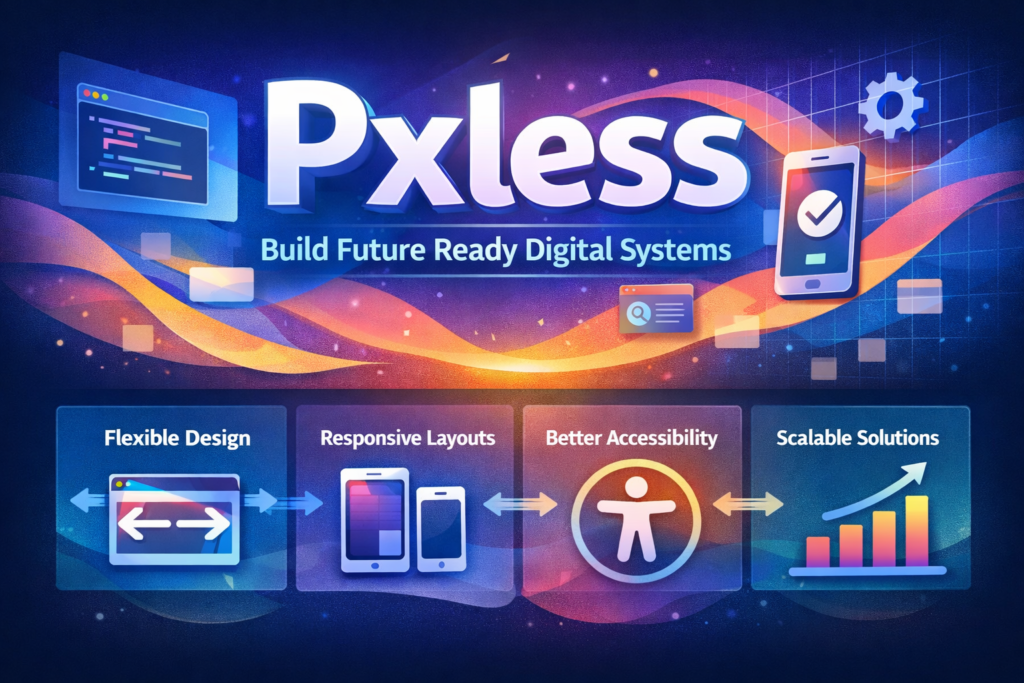

The digital world changes very fast. People use many devices pxless every day. Phones tablets laptops desktops and smart screens are all common. Users also change text size zoom pages and use accessibility tools. Old digital designs do not work well in this situation. Fixed layouts often break. Text becomes hard to read. Content looks wrong on many screens. it solves this problem. Pxless is a modern way to build digital systems. It avoids heavy use of fixed pixel sizes. It focuses on flexibility clarity and user comfort. Pxless helps websites apps and platforms work well on all devices Opang88.
Pxless is not just for designers. It is also useful for tools workflows and digital platforms. It is a mindset that prepares systems for change.
What Is Pxless
It means building digital experiences without strict pixel control. Instead of exact sizes Pxless systems adjust automatically.
it systems respond to:
-
Screen size
-
Device type
-
User font settings
-
Content length
-
Accessibility tools
it makes sure content stays readable and usable in all cases.
What Pxless Is Not
it does not mean:
-
Removing all pixels
-
Ignoring structure
-
Creating messy layouts
-
Losing visual quality
Pixels can still be used. They just do not control everything.
Why It Is Important Today
Digital use has changed. People expect websites and apps to work everywhere. They also expect comfort and accessibility.
Main Reasons Pxless Is Needed
-
Many screen sizes exist
-
Users zoom and resize text
-
Accessibility rules are stronger
-
Content changes often
-
Products must last many years
Fixed systems fail under these conditions. this systems adapt.
Core Principles of This
This is based on a few simple ideas.
Flexibility First
Layouts adjust naturally. Nothing is locked.
Content Comes First
Design supports content. Content does not fight design.
User Control Matters
User settings are respected. The system adapts to the user.
Systems Over Pages
Reusable parts replace single page designs.
Built for Growth
The system grows without breaking.
Key Features of This
This systems share common features.
Design Features
-
Flexible sizing
-
Scalable text
-
Adaptive layouts
-
Reusable components
-
Consistent spacing rules
Platform Features
-
Task management
-
Workflow automation
-
Real time updates
-
Cross device access
-
Data tracking
Core Elements of This
| Element | Description |
|---|---|
| Layout | Adapts to screen and content |
| Text | Scales with user settings |
| Components | Reusable building blocks |
| Accessibility | Supports user needs |
| Structure | Easy to expand |
Benefits of This
This helps users developers and businesses.
Benefits for Users
-
Easier reading
-
Better zoom support
-
Fewer layout issues
-
Comfortable experience
Benefits for Developers
-
Less redesign work
-
Easier updates
-
Cleaner systems
-
Lower maintenance
Benefits for Businesses
-
Faster development
-
Better user satisfaction
-
Long term stability
-
Scalable products
Pxless Benefits Overview
| Area | Result |
|---|---|
| Usability | Better user comfort |
| Accessibility | Inclusive experience |
| Maintenance | Lower effort |
| Productivity | Faster work |
| Growth | Easy scaling |
Use Cases of This
This works in many areas.
Website Design
Common examples:
-
Blogs
-
Business websites
-
Online stores
-
Content platforms
Software Products
Used for:
-
Web apps
-
Mobile apps
-
Design systems
-
Enterprise tools
Business Workflows
Used in:
-
Project management
-
Team collaboration
-
Automation systems
-
Reporting tools
Where Pxless Is Used
| Area | Examples |
|---|---|
| Web | Responsive sites |
| Apps | Cross device products |
| Design | System based layouts |
| Business | Workflow tools |
Challenges of Pxless
Pxless is powerful but needs care.
Common Challenges
-
Learning new thinking
-
Planning systems early
-
Avoiding chaos
-
Keeping consistency
When Pxless May Not Fit
-
Print style designs
-
Fixed image layouts
-
Static visual artwork
this works best with structure.
Best Practices for This
Follow these steps for success.
Recommended Steps
-
Start with user needs
-
Define spacing rules
-
Build reusable parts
-
Test on many devices
-
Document the system
Pxless Setup Checklist
| Step | Goal |
|---|---|
| Content planning | Clear structure |
| System rules | Consistency |
| Component reuse | Efficiency |
| Accessibility testing | Inclusivity |
| Ongoing updates | Stability |
Tools That Support This
Many modern tools support Pxless ideas.
Common Tool Types
-
Flexible layout systems
-
Component frameworks
-
Design systems
-
Automation platforms
Tools help but mindset matters more.
Safety and Trust Considerations
When it refers to a platform or service users should check:
-
Data protection
-
Privacy rules
-
Pricing clarity
-
Support quality
-
Authentic sources
This ensures safe use.
Future of This
This matches future digital needs.
Future Trends
-
More accessibility focus
-
Flexible layouts everywhere
-
Content driven design
-
Smarter automation
Rigid systems will fade. Flexible systems will grow.
Frequently Asked Questions
Is Pxless pixel free?
No. Pixels are used when needed.
Is it only for designers?
No. It works for platforms and tools.
Is it hard to learn?
It is simple but needs practice.
When should Pxless not be used?
For fixed print like designs.
Conclusion
It is a smart way to build digital systems. It supports users devices and future growth. It avoids rigid rules and embraces flexibility. it helps create websites apps and platforms that last longer and work better. It improves accessibility usability and productivity. As the digital world keeps changing Pxless provides a strong and reliable foundation.